

Last update:
Centralized administration with Aikyam Identity Console
Aug 21, 2026
The Aikyam Identity Console serves as a unified platform for administering identity and security, enabling organizations to efficiently manage user access and related security controls.
- Application lifecycle management
- User lifecycle management, and
- Identity analytics
Let us explore each step in detail.
- Application lifecycle managementThe Identity Console empowers administrators and application advocates to govern the end-to-end process of registering applications, as well as managing their resources, access, and governance requirements throughout the application lifecycle. For a detailed user guide, refer to this document.
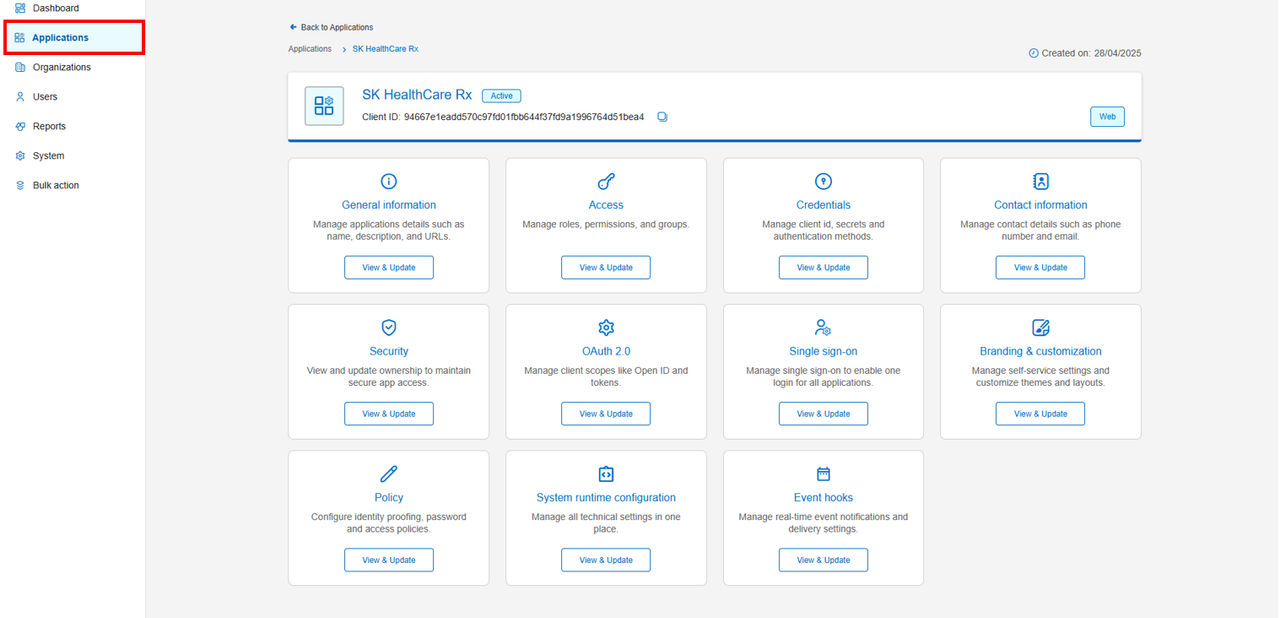 The process includes the following key steps:
- Onboard the web, M2M (machine-to-machine) application, or native devices in to the Aikyam Identity Console.
- Application and access managementManage applications effectively throughout their lifecycle using a comprehensive suite of tools designed for configuration, security, access control, and customization.
- Configure basic details: Define general and contact information of the application, and delegate roles to application advocates for independent user lifecycle management.
- Manage application credentials: Securely manage authentication credentials such as Client ID and Client Secret to ensure safe and reliable communication between the application and its users or systems.
- Authentication & authorization: Implement secure access protocols by configuring Single Sign-On (SSO) and OAuth 2.0. These settings govern how users and systems authenticate and gain authorized access to application resources.
- Configure security policies: Establish and enforce critical security policies, including identity proofing, password policies, authentication behavior, and user registration standards.
- Configure branding & customization: Personalize the application's user interface, including branding elements like the sign-in screen, content source, and logo.
- Access management: Develop a robust and adaptable security strategy by leveraging various access control models, such as role-based and group-based access. This approach ensures that sensitive patient health information (PHI) remains protected, while authorized individuals can access the resources they need to perform their duties effectively.
- Enable/Disable an applicationEnable or disable an application during security incidents, compliance resolutions, or maintenance activities.
- User life cycle managementAikyam Identity Console supports end-to-end identity management for both providers (caregivers) and consumers (members or patients), including:
- User provisioning: Registering users and assigning access.
- Self-service capabilities: Profile management, password management, and access request handling.
- Identity deprovisioning: Secure removal of user access when no longer required.
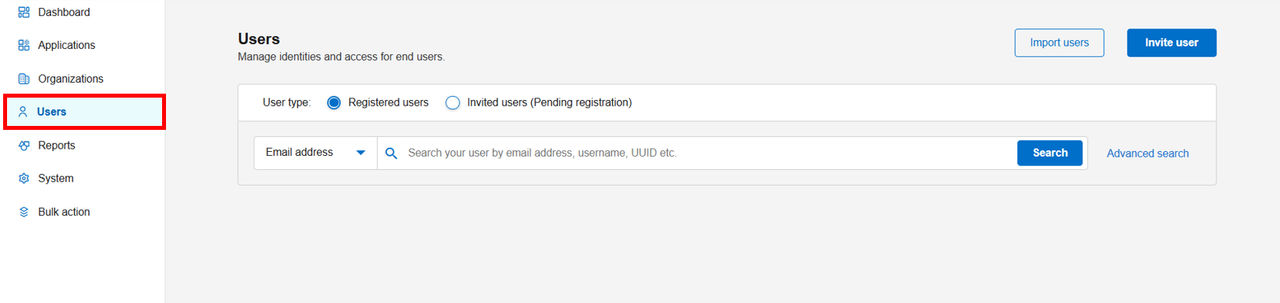
- Identity analytics:Provides insights into user access patterns, entitlement reviews, and audit trails. Reports help identify anomalies in user behavior or access grants.
Previous:
Explore the Identity Console
Next:
Delegate access
Share additional feedback to help us improve.
0/255
|
Powered by Aikyam @2025 All rights reserved

+1 866 451 2735
 +1 866 451 2735

+1 855 819 5909